Insecticide-treated nets (ITNs) are one of the most effective tools for malaria prevention, yet distribution alone does not guarantee protection. Ownership, access, and actual usage often diverge sharply — and that gap tells a more important story than any single metric.
This project applied the WHO/RBM 2024 ITN indicator framework to household survey data from 67 LGAs across Kano and Kaduna States, computing six indicators per LGA and mapping their spatial distribution. The goal was to identify not just where coverage is low, but why — distinguishing between supply-side failures and behavioural gaps.
The analysis drew on 161,291 individual records and approximately 27,000 household records, making it one of the most granular LGA-level ITN assessments conducted in northern Nigeria.
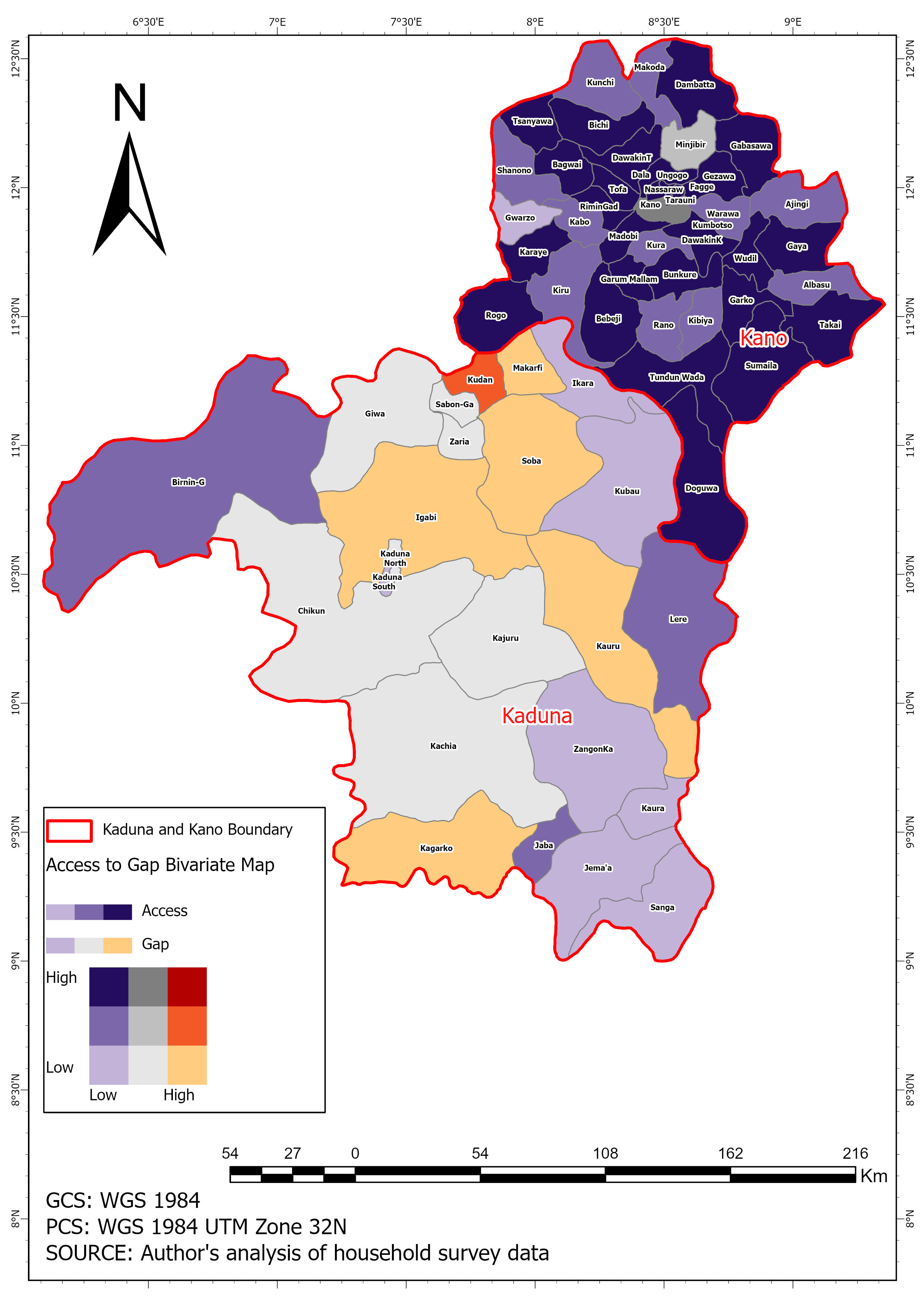
Spatial autocorrelation using Global Moran's I confirmed non-random clustering of coverage gaps. Getis-Ord Gi* hotspot detection then pinpointed the specific LGAs driving that clustering. A bivariate choropleth cross-classified access and behavioural gap into four actionable programmatic typologies.
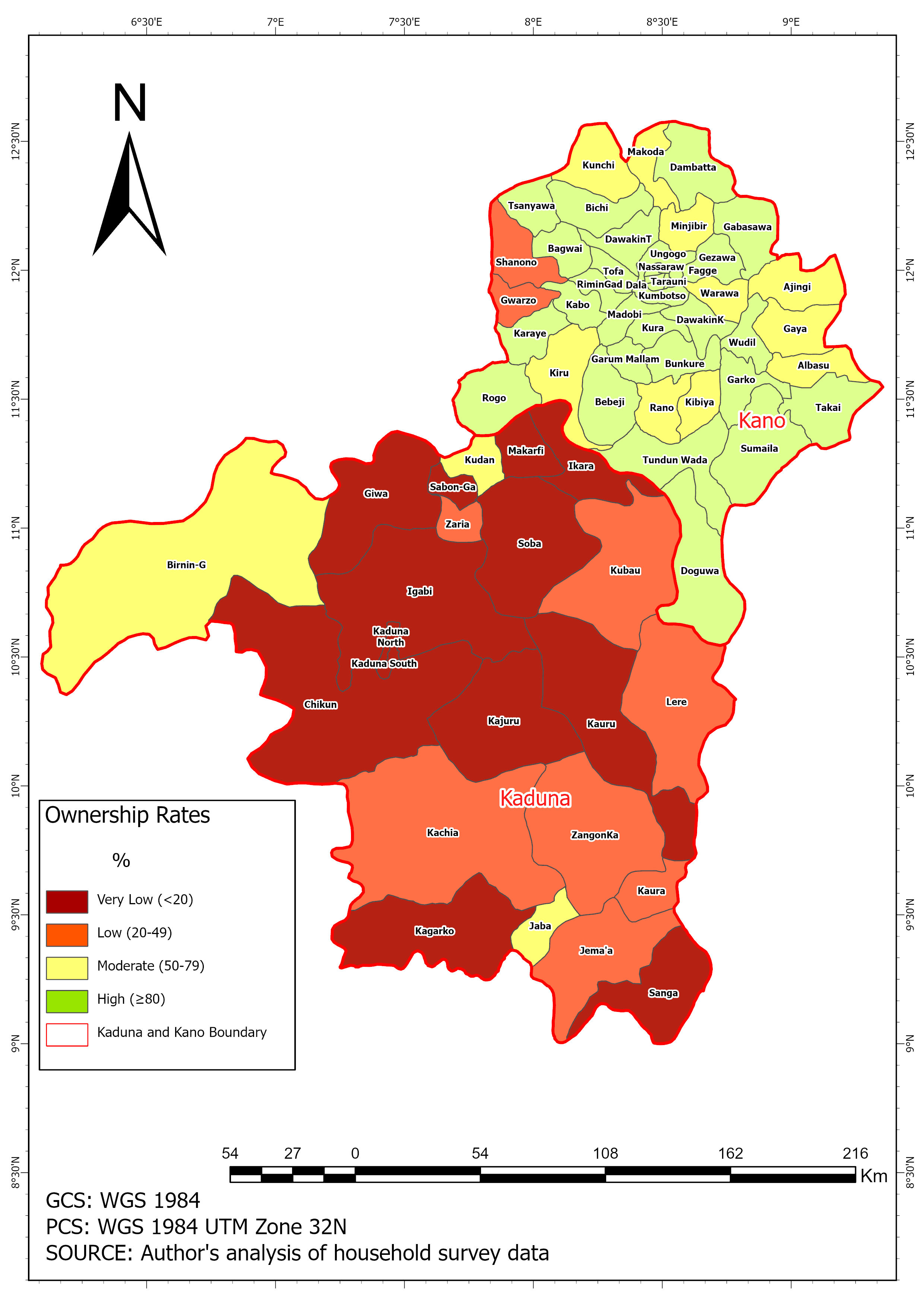
Proportion of households owning at least one ITN. The baseline supply-side indicator — a household without a net cannot be protected regardless of behaviour.
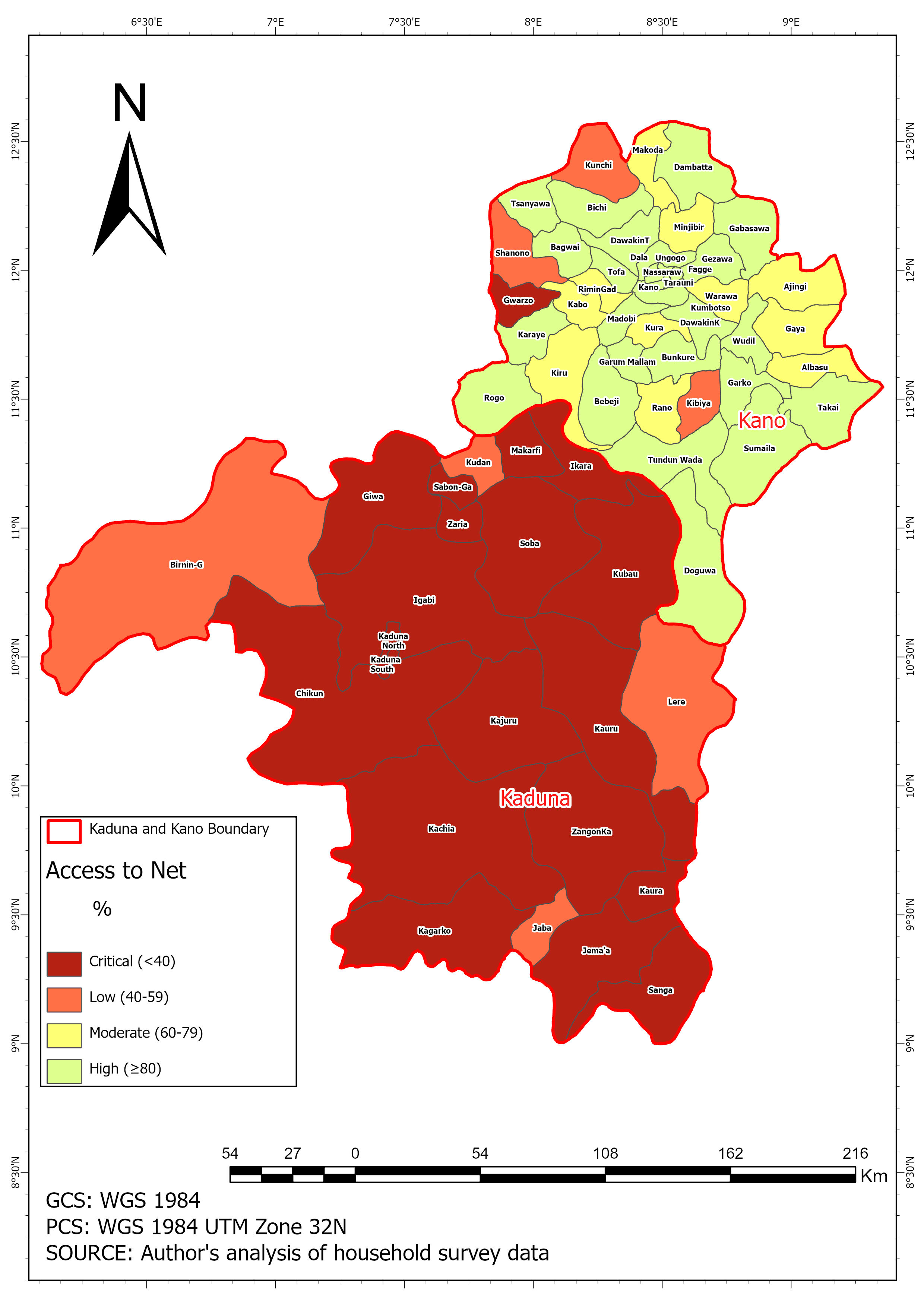
Proportion of the household population with access to an ITN, using the 1:2 net-to-person standard. Access is lower than ownership where nets are outnumbered by people.
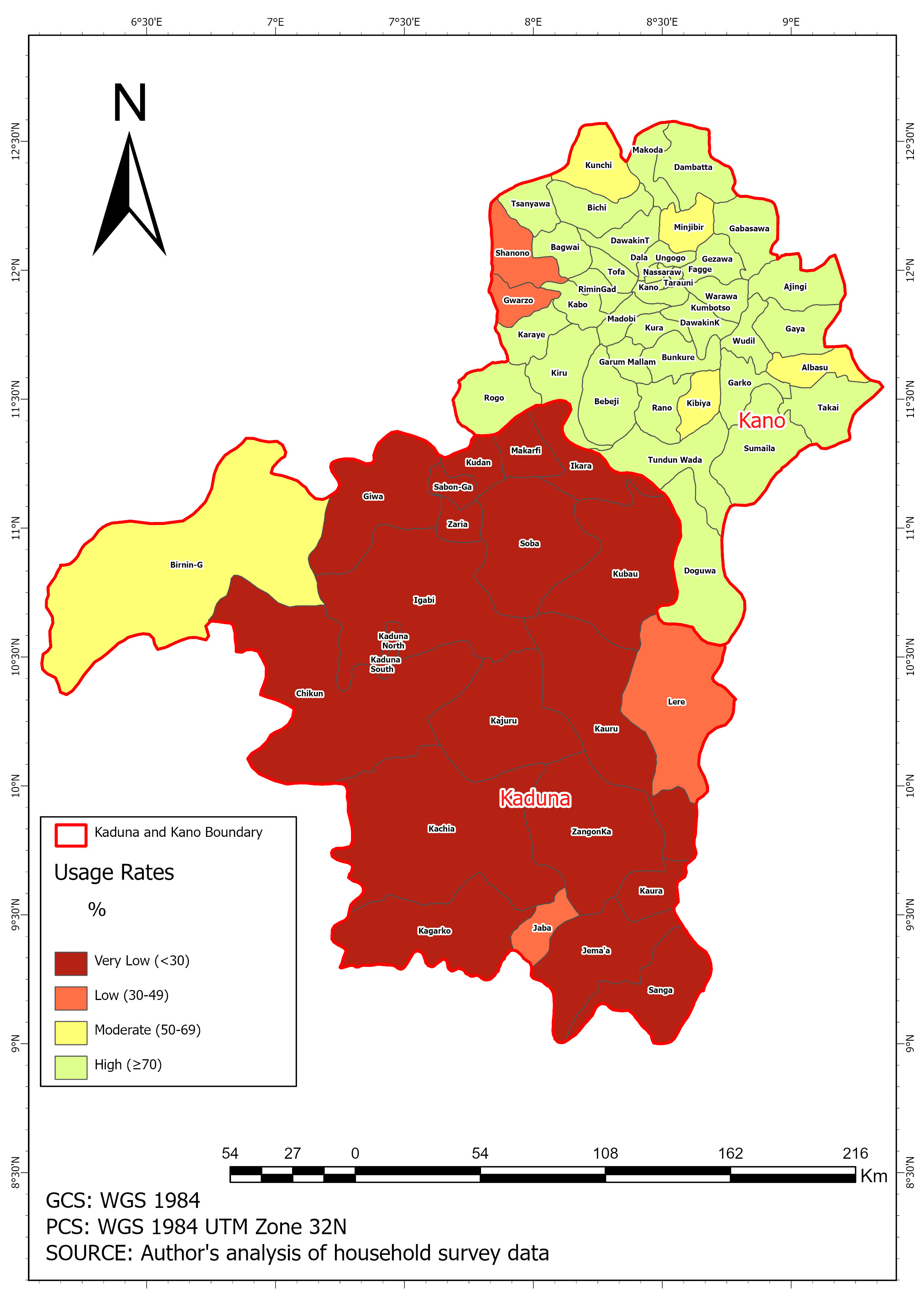
Proportion of the population who slept under an ITN the previous night. The most direct measure of actual protection achieved.
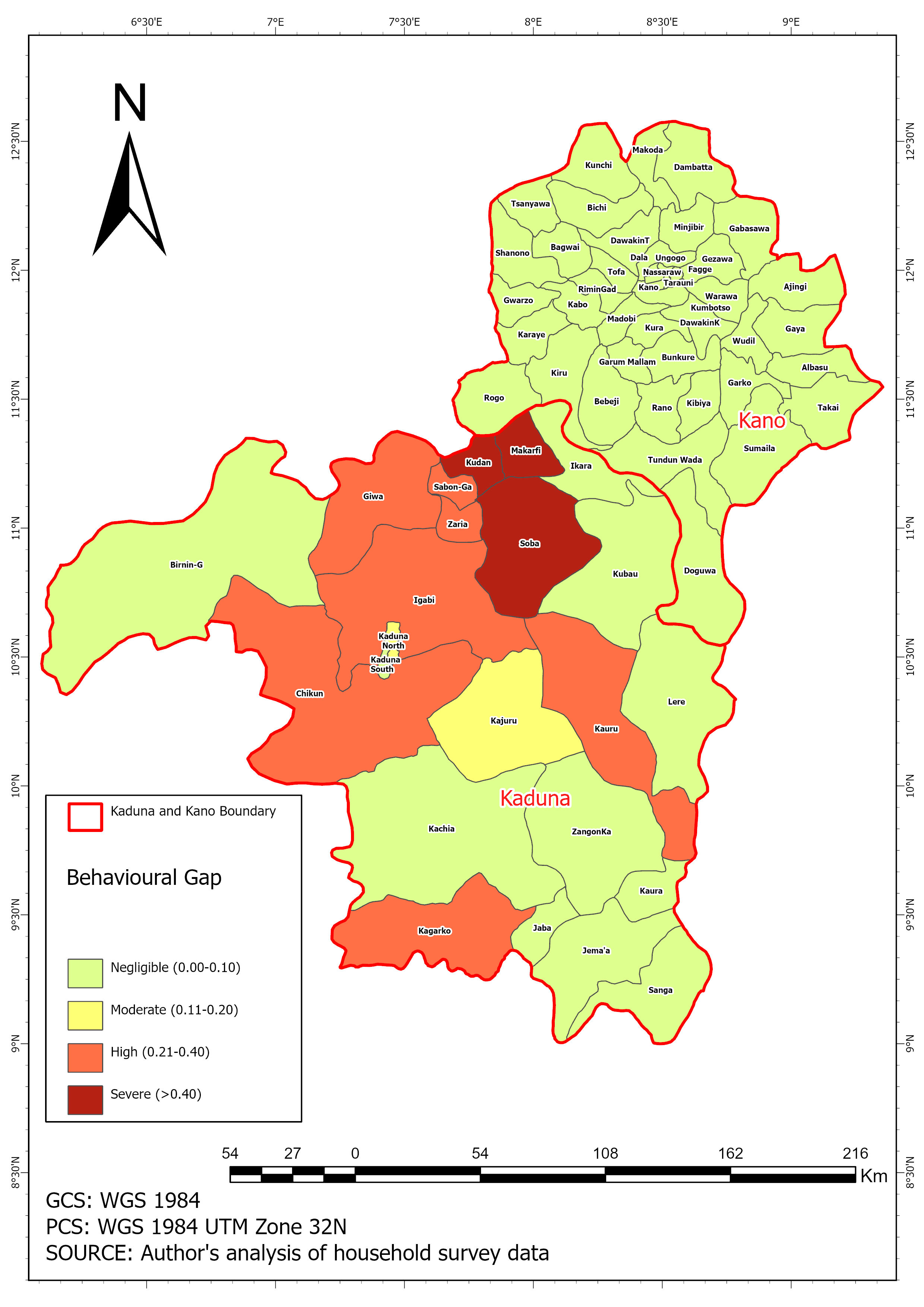
The difference between access and usage — people who had a net available but did not use it. A high gap signals behaviour and knowledge barriers, not supply shortfalls.
ITN usage among children under 5 — a WHO priority subgroup given their disproportionate malaria mortality burden.
ITN usage among women aged 15–49 — the second WHO priority subgroup, particularly pregnant women at elevated malaria risk.
All indicators were computed per LGA and mapped as choropleth layers. The contrast between Kano (generally moderate to high access) and Kaduna (predominantly critical to low across all indicators) is the defining spatial pattern of this analysis.
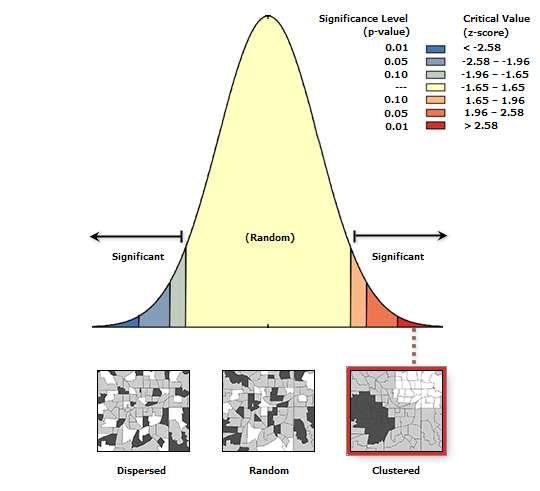
Global Moran's I confirmed statistically significant spatial clustering of the behavioural gap across LGAs. The pattern is not random — LGAs with high gaps cluster together, and this spatial dependence justifies the use of local indicators to identify where the problem concentrates.
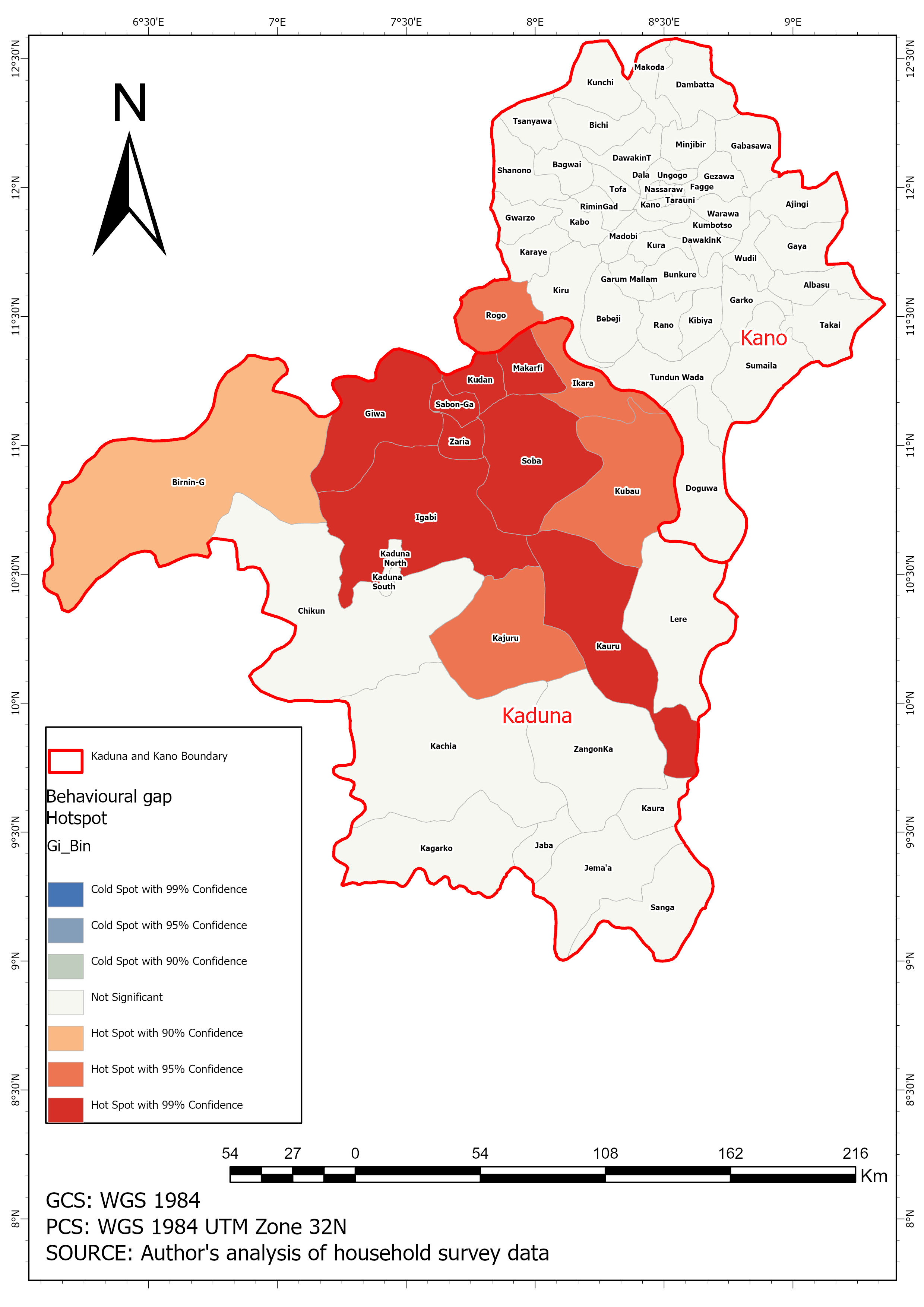
Getis-Ord Gi* hotspot analysis identified the specific LGAs driving this clustering. Kaduna's central corridor — including Igabi, Zaria, Sabon-Ga, Soba, and Kudan — emerges as a statistically significant hotspot at 99% confidence. These are LGAs where nets exist but are consistently not being used, pointing to behaviour-change interventions rather than additional net distribution.
| Data | Records | Use |
|---|---|---|
| Member-level survey data | 161,291 individuals | Usage, access, and subgroup (U5, W15–49) indicator calculation |
| Household-level survey data | ~27,000 households | Ownership and universal coverage indicator calculation |
| LGA boundary shapefile | 67 LGAs | Spatial join, choropleth mapping, and autocorrelation analysis |
Performs critically across all six indicators. Ownership, access, and usage rates are predominantly in the lowest categories, pointing to both supply-side deficits and behavioural barriers that require a dual-track programmatic response.
Shows moderate to high access rates in most LGAs, but the behavioural gap remains a challenge. Nets are reaching households but are not always being used, suggesting the focus should shift from distribution to behaviour-change communication.
Global Moran's I confirmed statistically significant spatial clustering of the behavioural gap. Coverage failures are not randomly distributed — they concentrate geographically, making spatial targeting of interventions both valid and necessary.
The bivariate choropleth classified LGAs into four programmatic typologies: High Access / Low Gap (maintain), High Access / High Gap (behaviour change needed), Low Access / Low Gap (distribution needed), and Low Access / High Gap (both required).